

A New Standard for Choosing Chocolate with Skin Health in Mind: The Science of Cacao and the Choice of Raw Chocolate
HaretoKetoChocolate is generally recognized as "sweet and delicious," but in recent years, research has suggested that compounds found in cacao may play a role in skin condition.
However, the impact on the body varies greatly depending on the amount of sugar and the degree of processing, so "which chocolate to choose" is important.
In this article, we will scientifically organize how cacao components may be involved in the skin and explain raw chocolate, which is recommended as a gift.
"Eating chocolate gives me acne."
"I like chocolate, but I avoid it because it's bad for my skin."
Thus, chocolate often has the impression of being "bad for the skin."
However, if you choose chocolate not as a sweet indulgence, but with an eye towards beauty and health, the criteria change significantly.
Why is it said that "eating chocolate causes skin problems"?
Cacao and Skin: Key Components of Cacao and Their Power
The main factors in cacao that are thought to affect the skin are primarily the following components:
Flavanols (Epicatechin and Catechin)
Among cacao polyphenols, flavanols are particularly noteworthy and have been reported to have the following effects:
① Improvement of microcirculation
Flavanols promote the production of nitric oxide (NO) and induce vasodilation.
This increases blood flow to the skin, leading to:
・Improved oxygen supply
・More efficient nutrient transport
which may help maintain skin condition.
② Effect on photoaging (oxidation)
Human studies have reported that groups who continuously consumed high-flavanol cocoa showed:
・Decreased UV sensitivity
・Improved skin density and moisture content
This is thought to be because the antioxidant effect mitigates the inflammatory response caused by UV radiation.
Theobromine
A unique cacao alkaloid (organic base) with the following characteristics:
・Vasodilation
・Mild diuretic effect
・Gentle stimulation of the autonomic nervous system
This is also thought to help regulate skin blood circulation.
Minerals (especially magnesium)
Magnesium is an important mineral involved in bone formation, energy metabolism, neurotransmission, and vasodilation, and since it is involved in
・Regulation of inflammatory responses
・Stress reduction
it is suggested to prevent stress-related skin problems.

Skin care varies with the type of chocolate
Presence of carbohydrates
Many commercially available chocolates use refined sugars such as white sugar.
Refined sugars are absorbed quickly, causing a rapid rise in blood sugar, which can affect inflammatory responses and sebum secretion.
Furthermore, dairy ingredients in milk chocolate have been noted for their potential link to inflammatory responses and hormonal balance, which may affect the skin depending on an individual's constitution.
Since most commercial chocolates are milk chocolates with sugar and dairy as primary ingredients, they are thought to be more prone to causing skin problems.
Also, when considering the functionality of cacao, differences in the manufacturing process are an important factor.
Characteristics of general chocolate
Commercial chocolates generally involve the following processes:
・High-temperature roasting
・Alkalization (Dutch process)
While roasting brings out complex and rich cacao aromas and alkalization reduces bitterness, making it easier to eat, it is known that flavanols are significantly reduced.
Research has shown cases where polyphenol content decreased by more than 50-80% due to alkalization.
Characteristics of craft chocolate and raw chocolate
Raw Chocolate
Through low-temperature processing and non-alkalization, the original flavanols of cacao are relatively well preserved.
Furthermore, since raw chocolate was created with health in mind, it is generally made without refined sugars, additives, or other ingredients that place a burden on the body.
Craft Chocolate
By using single-origin cacao and avoiding excessive processing, it tends to maintain the unique flavor and nutritional properties of cacao.
Does "good for skin" chocolate exist?
Chocolate itself does not have direct medicinal effects that improve the skin.
However,
・Blood flow
・Antioxidant
・Inflammation regulation
Multiple studies suggest that cacao components may indirectly affect the physiological functions of the skin.
In other words, chocolate
can be positioned as a luxury item that also supports skin health, depending on its manufacturing process.
The choice of raw chocolate
When considering skin and physical condition, the criteria for choosing chocolate boil down to these four points:
- Cacao content
- Sugar content (presence or absence of refined sugar)
- Content of dairy products and fats
- Presence or absence of additives
Raw chocolate can be said to be a chocolate that prioritizes health in these aspects.

Haretoketo Raw Chocolate
"Haretoketo." is a raw sweets brand that manufactures and sells raw sweets in a traditional samurai residence located in the castle town of Hikone.
Haretoketo's raw chocolate not only leverages the cacao components but also emphasizes its value as a culinary experience.
Focused on high cacao content, it maintains the characteristics of cacao through low-temperature processing, while enhancing sensory and visual satisfaction, making it satisfying even in small quantities.
Furthermore, with the philosophy of creating a slightly special moment (hare no jikan) in everyday life and enriching one's life with balance, it is positioned as an indulgence that fills both body and mind with energy.
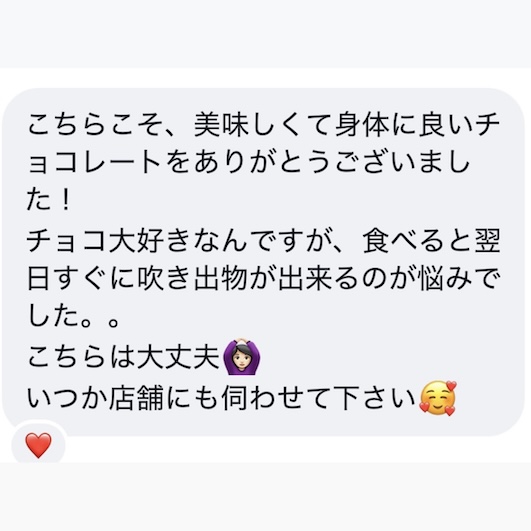
Here are some testimonials:

If choosing as a gift
Raw chocolate is a sweet that can offer both "deliciousness" and "health consciousness."
Among these, Haretoketo. is
・Health benefits
・Deliciousness
・Cultural aspect
・Visual appeal
By satisfying all of these simultaneously, it becomes a gift with more meaning than just a sweet.
Summary
The impression that chocolate is bad for the skin has been influenced by sugar content and processing conditions.
On the other hand, cacao has been suggested to potentially influence fundamental skin physiology such as blood flow and antioxidant activity, and these properties are thought to be better preserved in less processed chocolates.
Raw chocolate is an option that balances the satisfaction of a luxury item with consideration for the body, and Haretoketo.'s raw chocolate embodies health, deliciousness, and elegance.
When choosing a gift, why not consider "choosing for skin health" as a new criterion?
▶︎ Chocolate gifts here https://store.haretoketo.com/collections/gift
▶︎ Anniversary chocolate cakes here https://store.haretoketo.com/collections/raw-cake

